

Women’s Self Defense Classes: An Evidence-Based Perspective on Training, Safety, and Real-World Application
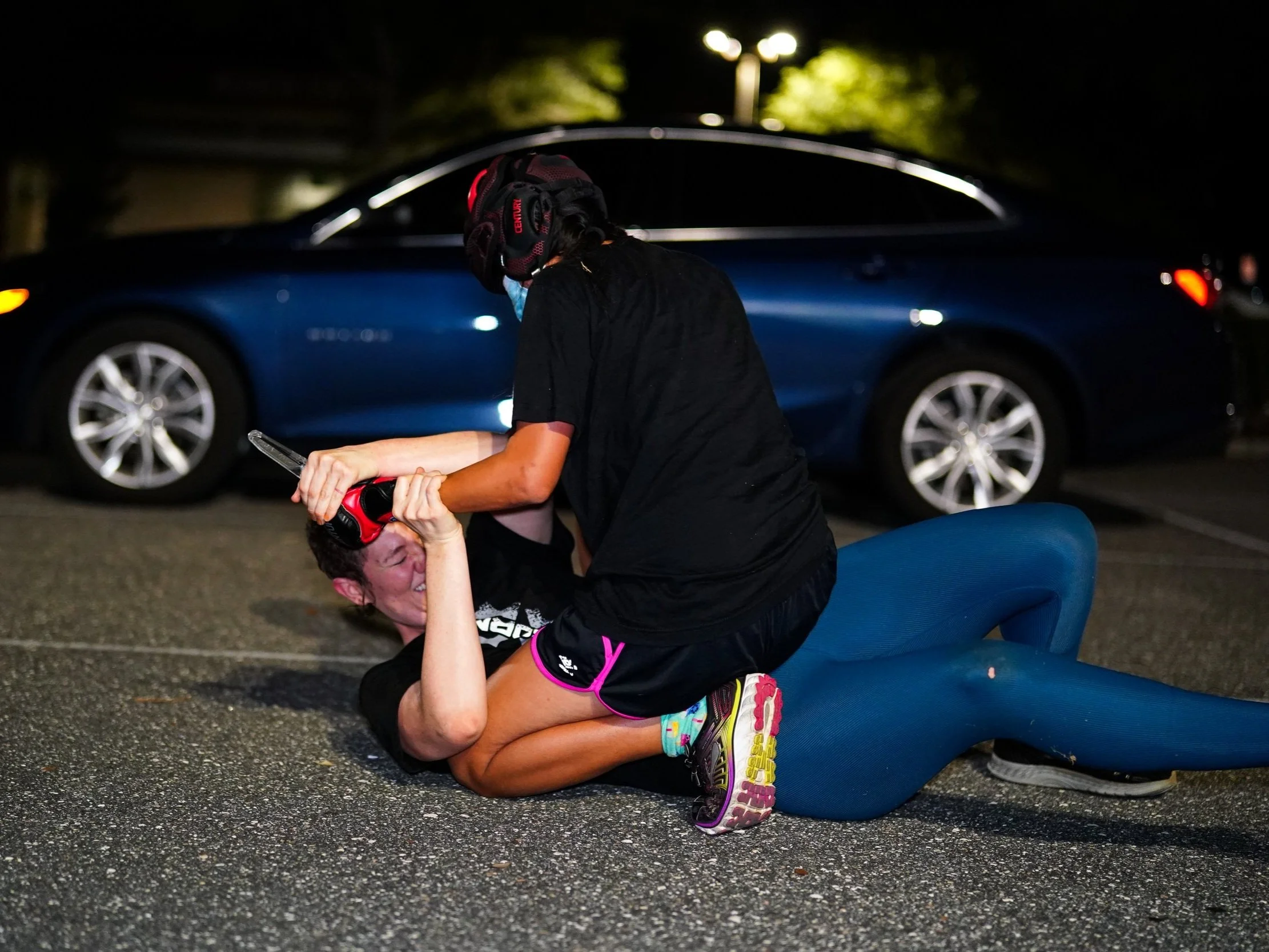
Photo Credit Manuela Davies, for Shaan Saar Krav Maga ©️ 2020 All Right Reserved
The significance of women’s self defense classes in modern violence prevention
The significance of women’s self defense classes extends far beyond the acquisition of basic techniques or participation in a recreational martial arts setting.
In practice, most self defense training available to women focuses disproportionately on physical engagement, what to do once a confrontation has already escalated into physical attacks. This reflects a broader misunderstanding of self defense as a purely physical discipline versus a multi-layered system of self protection that begins well before contact is ever made.
From a behavioral and medicolegal standpoint, the majority of dangerous situations are shaped by pre-incident indicators: patterns of harmful intent, environmental context, and failures in early recognition. As such, self defense classes for women that fail to address these components are incomplete by design.
Moving Beyond “Empowerment” Toward a Situation Effective Defense Training System
The language surrounding women’s self defense has increasingly centered on the idea to “empower women.” While well-intentioned, the phrase has become conceptually diluted within the industry.
Effective training is not built on abstraction. It is built on systems.
A situation effective protection system must account for how individuals react under stress, how fear alters perception, and how cognitive load disrupts recall of self defense skills. Under acute threat, the nervous system does not produce a single predictable behavioral response. Instead, it prepares the organism for multiple defensive options, including freezing, fighting, or fleeing, depending on context and perceived survivability (Sun et al., 2020).
Further, physiological research demonstrates that behavioral output is state-dependent. Individuals may experience heightened arousal, reduced reactivity, or immobilization depending on prior exposure to stress and the nature of the threat itself (D’Andrea et al., 2013). Under these conditions, fine motor coordination degrades, decision-making narrows, and reliance on previously encoded patterns becomes critical (Grossman, 2009).
Without training that reflects these realities, the ability to defend oneself remains theoretical.
Why Women Require Specialized Self Defense Training Environments
Women encounter different types of threats than men, often characterized by proximity, familiarity with the attacker, and escalating boundary violations rather than immediate overt violence. From a defensive neuroscience perspective, these interactions occur in earlier phases of the threat response cascade, where individuals are engaged in orienting, appraisal, and pre-contact decision-making rather than immediate physical engagement (Alemany-Gonzalez & Koizumi, 2026).
This necessitates a model of defense training that prioritizes the recognition of behavioral patterns, early boundary setting and verbal disruption, management of distance and positioning, and the identification of vulnerable areas for effective response.
These elements are not secondary to physical training; they are foundational to it.
The Limitations of Traditional Martial Arts in Addressing Real-World Violence
Disciplines such as Krav Maga, Brazilian Jiu Jitsu, and other martial arts can offer valuable physical self defense skills. However, they are not, in isolation, comprehensive violence prevention systems.
Most operate within structured environments with defined engagement parameters. Real-world encounters do not provide such clearly bounded conditions. Defensive neuroscience consistently demonstrates that human threat responding includes multiple possible outcomes, including fight, flight, freezing, and immobilization, depending on situational variables and internal state (Sevenster et al., 2014).
While martial arts systems can enhance a student’s ability to engage physically, they do not inherently train the recognition of emerging threat, the management of pre-contact escalation, or the ability to transition effectively between these defensive states.
Research consistently indicates that exposure to physical training alone does not correlate with reduced rates of victimization, particularly when broader behavioral and environmental factors are not addressed (Smith et al., 2018). While these systems can enhance a student’s ability to fight, they do not inherently improve the ability to identify, respond, and disengage from emerging threats.
Psychological and Behavioral Outcomes of Effective Self Defense Training
The psychological benefits of self defense classes are well-documented, particularly in women-only environments.
Participation in structured self defense programs has been associated with increased self-efficacy, assertiveness, and reductions in perceived vulnerability (Brown & Wilson, 2016; Smith & Johnson, 2018). These outcomes are not derived solely from physical capability, but from the integration of cognitive, emotional, and behavioral skills.
Importantly, these programs provide a framework for dealing with uncertainty, ambiguity, and interpersonal risk, conditions that define the majority of real-world encounters.
What Distinguishes an Effective Self Defense Program
At Shaan Saar, the training model is built around an evidence-based framework that integrates behavioral science with applied physical training.
This includes our Evidence-Based Self Defense™ framework, designed to develop threat recognition and contextual awareness, verbal control and disruption of escalation, efficient physical response under stress, and post-incident decision-making.
Rather than emphasizing a catalog of techniques, the program focuses on developing a repeatable process that functions under pressure.
Training includes exposure to both close-range engagements and ground scenarios. Students are trained to identify emerging threats, control escalation through verbalization, and make decisive, informed actions under pressure, long before a situation turns physical.
Importantly, the program provide a framework for dealing with uncertainty, ambiguity, and interpersonal risk, conditions that define the majority of real-world encounters. From a neurobehavioral standpoint, unpredictable threat increases defensive activation and attentional engagement, placing greater demand on an individual’s ability to process and respond effectively under pressure (Ferry et al., 2023).
Practical considerations in Self Defense Classes for Women: Tools, Tactics, and Real-World Application
Effective self defense training must also address commonly discussed tools such as pepper spray and other defensive sprays. While these can be useful, their effectiveness is highly context-dependent and requires understanding of deployment limitations, legal considerations, and environmental variables.
Similarly, students are taught to evaluate, the role of force in self defense, the impact of positioning and timing, and the risks associated with delayed reaction.This level of understanding is what separates theoretical knowledge from applied capability.
Who Benefits From Women’s Self Defense Classes
Self defense classes for women are particularly relevant for women navigating new environments, a young woman preparing for increased independence, mothers concerned with personal safety for themselves and their families, and individuals who recognize gaps in their ability to respond under stress. For young girls 13 years and older, we strongly suggest the Evidence Based Self Defense™️ training program for teens.
Classes at Shaan Saar Krav Maga can be especially impactful for those who have previously relied on passive or purely informational approaches, including free online course content and single day seminars that deal exclusively with physical application.
From Knowledge to Capability: Why Training Must Be Physical
There is a growing availability of free online resources related to self defense. These platforms can provide valuable foundational knowledge, particularly in areas such as personal safety, threat recognition, and early-stage decision-making. In many cases, this type of learning is especially beneficial for women who are beginning to explore self defense and develop an initial understanding of dangerous situations and harmful intent.
However, self defense skills exist across multiple domains. Cognitive understanding represents one layer. Physical execution, defined by the ability to respond under conditions of stress, represents another. Critically, these domains are mediated by physiological state. Defensive neuroscience demonstrates that under threat, individuals may not default to action. Instead, responses may include motor inhibition, freezing, or reduced reactivity, depending on autonomic state and perceived threat conditions (Roelofs, 2017; D’Andrea et al., 2013).
The transition from knowledge to action is therefore not automatic. It requires repeated exposure to movement, the experience of operating under stress, and the development of reliable skill acquisition that remains accessible when cognitive bandwidth is limited.
Online education can play a meaningful role in developing awareness and understanding of threats, reinforcing early-stage boundary setting, and introducing conceptual frameworks for self protection. These are not secondary considerations; they are foundational to how individuals perceive and process risk in the real world. At the same time, the ability to defend oneself in violent situations is significantly strengthened by physical rehearsal, particularly when operating under stress. The transition from knowledge to action requires repeated exposure to movement, the experience of operating under stress, and the development of reliable skill acquisition under stress which can be accessed when cognitive bandwidth is limited.
Without these components, the application of self defense skills remains inconsistent. Individuals may understand what should be done, yet find themselves unable to execute under pressure. For this reason, self defense training must be both cognitive and physical in nature. Online learning establishes the framework through which threats are recognized and interpreted, while in-person self defense practice helps to develop the capacity to act within those conditions.
When these layers are integrated, the result is a more complete and life changing approach to women’s self defense, one that reflects the full reality of how individuals perceive, evaluate, and respond to threats.
Women’s Self Defense Courses at Shaan Saar Krav Maga
For individuals interested in developing practical, real-world capability, Shaan Saar Krav Maga offers structured entry into womens only courses (4 week course, starting June 3rd, 2026). Additional program details, including scheduling and curriculum structure, can be found at Shaan Saar Krav Maga’s women’s self defense page where the full scope of training is outlined.
This self defense training does not isolate physical techniques from the broader context in which violent situations develop. It places equal emphasis on how threats are recognized, how harmful intent is interpreted, and how individuals position themselves, both behaviorally and verbally, before a situation escalates.
As training progresses, women develop self defense skills that are selected for their reliability under stress and skill acquisition under stress. The emphasis is on building the capacity to respond and react effectively when conditions are unpredictable and cognitive processing is limited.
Importantly, this is not a passive class, nor is it a generalized fitness model built around martial arts for recreation. It is a guided progression that integrates cognitive understanding with physical execution, allowing students to build the ability to defend themselves in a way that reflects the reality of how violent situations unfold.
A final consideration on safety and responsibility
Violence is not evenly distributed, and it rarely unfolds without context. Patterns exist in behavior and circumstance, and learning to recognize those patterns can meaningfully influence how situations are interpreted and navigated. From a behavioral science perspective, threat responses emerge along a continuum, with individuals moving through stages of detection, appraisal, and potential action depending on threat proximity and perceived risk (Alemany-Gonzalez & Koizumi, 2026).
Within the context of women’s self defense, this requires a shift away from viewing safety as purely reactive, and toward a model of self protection grounded in awareness, interpretation, and timely action.
Understanding these dynamics, recognizing weaknesses in awareness, identifying escalation cues, and developing the capacity to respond with clarity under pressure, forms the foundation of effective self defense skills. While no system can eliminate risk entirely, structured self defense classes for women that address both the cognitive and physical dimensions of defense training can meaningfully reduce vulnerability.
When this level of training is approached with consistency, and reinforced within a supportive learning environment, the outcome extends beyond technique acquisition. For many women, including a young woman navigating new independence or those reassessing their approach to personal safety, the process becomes life changing in a measurable sense. It reshapes perception, improves decision-making under stress, and reinforces the ability to act with intention in the face of uncertainty.
References
Alemany-Gonzalez, M., & Koizumi, A. (2026). Reconceptualizing human fear memory through the defense cascade. Neurobiology of Learning and Memory, 223, 108126. https://doi.org/10.1016/j.nlm.2025.108126
Brown, C. & Wilson, K. (2016). Building Empowerment through Self-Defense Training for Women. Journal of Applied Psychology, 25(4), 37-52.
D’Andrea, W., Pole, N., DePierro, J., Freed, S., & Wallace, D. B. (2013). Heterogeneity of defensive responses after exposure to trauma: Blunted autonomic reactivity in response to startling sounds. International Journal of Psychophysiology, 90(1), 80–89. DOI: 10.1016/j.ijpsycho.2013.07.008
Ferry, R. A., Beatty, C. C., Klein, D. N., & Nelson, B. D. (2023). Family study of the startle reflex and event-related potentials in anticipation of predictable and unpredictable threat in adolescents and their parents. Psychophysiology, 60(9), e14311. https://doi.org/10.1111/psyp.14311
Grasser, L. R., Saad, B., Bazzi, C., Abu Suhaiban, H., Mammo, D. F., Izar, R., Abou Rass, N., Winters, S. J., Nashef, R., Abed Ali, A., Javanbakht, A., & Jovanovic, T. (2023). The fear that remains: Associations between trauma, related psychopathology, and fear-potentiated startle in youth resettled as refugees. Developmental Psychobiology, 65, e22385. https://doi.org/10.1002/dev.22385
Grossman, D. (2009). On combat: The psychology and physiology of deadly conflict in war and in peace (3rd ed.). Warrior Science Publications.
Rousseau, P. V., Matton, F., Lecuyer, R., & Lahaye, W. (2017). The Moro reaction: More than a reflex, a ritualized behavior of nonverbal communication. Infant Behavior and Development, 46, 169–177. https://doi.org/10.1016/j.infbeh.2017.01.004
Roelofs, K. (2017). Freeze for action: Neurobiological mechanisms in animal and human freezing. Philosophical Transactions of the Royal Society B: Biological Sciences, 372(1718), 20160206. https://doi.org/10.1098/rstb.2016.0206
Sevenster, D., Beckers, T., & Kindt, M. (2014). Fear conditioning of SCR but not the startle reflex depends on conscious discrimination of threat and safety. Biological Psychology, 101, 134–141. https://doi.org/10.1016/j.biopsycho.2014.07.002
Smith, A. & Johnson, B. (2018). Women's Empowerment and Self-Confidence through Physical Activities in Women-Only Settings. Journal of Gender Studies, 20(3), 271-286.
Smith, M. L., China, L., Wingood, G., Daly, K., & Obasi, E. (2018). An Examination of the Factors Influencing the Effectiveness of Intimate Partner Violence Prevention Programs Aimed at Ethnic Minority and Minority Populations: A Systematic Review. Journal of Aggression, Maltreatment & Trauma, 27(2), 127-147.
Sun Y, Gooch H and Sah P. Fear conditioning and the basolateral amygdala [version 1; peer review: 3 approved]. F1000Research 2020, 9(F1000 Faculty Rev):53 (https://doi.org/10.12688/f1000research.21201.1)

ABOUT THE AUTHOR
Renée Rose is a Medicolegal Consultant, Forensic Crime Analyst, and creator of the Trauma Informed Self-Defense™ framework. Her work integrates clinical forensic psychological education and research with Evidence-based self defense focusing on skill acquisition under stress and how judgment and decision-making function under stress in real-world contexts.
Copyright and Intellectual Property Notice
© 2026 Shaan Saar Krav Maga Orlando. All rights reserved.
Trauma-Informed Self Defense™, Evidence-Based Self Defense™, Transform Fear™, and all related training methodologies, frameworks, course structures, terminology, and instructional materials referenced herein are proprietary intellectual property of Shaan Saar LLC.
No portion of this publication may be reproduced, distributed, transmitted, adapted, or otherwise used for commercial or instructional purposes without express written permission. Informational citation with proper attribution is permitted; replication of methodology, sequencing, instructional design, or training structure is prohibited.