

Best Martial Arts To Learn For Self Defense Under Stress
People searching for the best martial art for self-defense often assume effectiveness is primarily technical. The discussion usually centers on which system has better strikes, stronger grappling, more aggressive tactics, or a broader set of techniques.
However, real-world violence rarely unfolds under ideal conditions.
Stress, surprise, environmental constraints, multiple attackers, and uncertainty fundamentally alter how individuals perceive, decide, and act under pressure. Under these conditions, the question becomes less about which martial art contains the best techniques and more about which training methods remain functional when cognitive processing, coordination, and decision-making begin to degrade.
WHY TECHNICAL COMPARISONS ABOUT THE MOST EFFECTIVE MARTIAL ARTS FALL SHORT
Technical systems are foundational to many physical concepts in self defense. Boxing, Muay Thai, Brazilian Jiu Jitsu, wrestling, mixed martial arts, and Krav Maga can all develop valuable fighting ability. However, comparing modern self defense systems exclusively through techniques, competitive success, or the prowess of any particular creator (i.e., Bruce Lee, Imi Lichentenfeld, Gracie,etc.) overlooks evidence based factors that significantly influence real-world self-defense performance.
CRITERIA FOR EVALUATING THE BEST MARTIAL ART FOR SELF DEFENSE
People searching for the best martial arts for self-defense are often looking for a definitive answer: boxing, Muay Thai, Brazilian Jiu Jitsu, wrestling, Krav Maga, MMA, or another combat sport. Since effectiveness real world threats cannot be determined by style alone the more relevant consideration is whether the posited practical self defense system prepares individuals to function under stress, process uncertainty, and make decisions in real-world conditions.
Different martial arts develop different attributes. Some emphasize mobility and striking, while others focus on grappling, positional control, or competitive engagement. Some have built their notoriety on militaristic perspectives such as Krav Maga's connection to the Israeli military. Others have doubled down into their success in sport competition like Jeet Kune Do and Japanese Martial Arts. However, from a self defense perspective the best martial art for self-defense depends partly on the individual, including individual stress response, physical capability, training goals, age, injury history, psychological flexibility, and their willingness to train consistently over time. The teaching methodology of physical skills are not created equal and while the brute force and striking techniques of sport based martial arts are often a primary focus they are designed around the neuroscience or neuropsychology of how violence unfolds or is experienced. Physical ability does nothing for someone who freezes in a physical altercation, encounters multiple opponents, or needs to protect themselves with a real world encounter involving weapons.
Krav Maga which is widely known as one of the most effective self defense systems created, was developed as a practical system, specifically around real-world self-defense scenarios versus competitive engagement. Its emphasis on rapid threat disruption, aggressive counterattack, environmental awareness, and continued movement can provide advantages in situations involving surprise, weapons, or multiple assailants. However, even the effectiveness of Krav Maga remains dependent on training quality, mental discipline, stress exposure, and the practitioners skill in neutralizing threats outside of cooperative dojo drilling.
One of the biggest flaws in what are referred to as "Authentic Krav Maga" classes based exclusively on the traditional martial arts teachings of Imi Lichtenfeld is the expectation that one must control opponents from a standing position only and the grappling arts including Jui Jitsu and Catch Wrestling are notably absent from learning. Many modern day Krav Maga classes have begin to incorporate the takedown defense that BJJ practitioners typically have advantage in and vice versa; BJJ teaches some forms of weapons defense in ground fighting. These systems are moving toward the
Training environments of other martial arts also matters significantly. Instructor quality, amygdala response, scenario integration, and the ability to train decision-making under stress can influence real-world personal safety more than style branding. A highly experienced instructor who understands violence dynamics and human stress response may ultimately provide a distinct advantage for self defense techniques than a broader system taught without contextual realism.
For this reason, individuals interested in self-defense should not evaluate martial arts exclusively through online debate, competitive footage, or marketing claims. Trial training periods, training culture, and the opportunity to experience qualified instruction firsthand often provide a clearer understanding of whether a system aligns with practical self-defense needs.
POPULAR MARTIAL ARTS FAIL TO REALIZE THAT VIOLENCE IS DYNAMIC
The effectiveness of any self-defense system is influenced not only by the techniques it teaches, but also by the assumptions it makes about how violence actually unfolds. Many martial arts systems, particularly those shaped heavily by competitive structures or repetitive technical exchanges, implicitly frame violence as a relatively stable interaction between two prepared individuals. However, real-world confrontations are often behaviorally unstable, emotionally charged, and shaped by rapidly changing environmental and psychological conditions.
Why Violence Cannot be Understood as a Linear Exchange
Collins’ analysis is particularly important because it challenges the assumption that violence unfolds as a clean, linear exchange between two fully composed individuals. In reality, confrontations often involve rapidly shifting emotional states, uncertainty, interrupted rhythms of interaction, and sudden turning points that destabilize decision-making (Collins, 2020). This aligns closely with contemporary research examining how threat processing, autonomic arousal, and stress physiology alter perception and behavioral response under pressure. These processes are explored further within the Threat Processing Sequence (TPS) framework developed within Evidence-Based Self Defense™ training.
IN REAL LIFE SELF DEFENSE, STRESS CHANGES BEHAVIOR
Autonomic State Changes Under Threat
Real-world violence alters human behavior because threat exposure changes physiological state before conscious decision-making fully occurs. Contemporary threat neuroscience no longer conceptualizes survival behavior as a simplistic fight or flight reaction, rather as a dynamic sequence of defensive state transitions shaped by autonomic activation, threat proximity, and perceived survivability (Kozlowska et al., 2015; Roelofs, 2017). As threat intensity increases, the autonomic nervous system reallocates physiological resources toward survival-oriented responding, altering attention, movement, perception, and behavioral flexibility (Bradley et al., 2017).
Within this defensive cascade, individuals may initially orient toward threat cues, transition into freezing states associated with heightened sensory acquisition, and later shift into active escape or aggressive defensive behavior depending upon environmental conditions and perceived threat imminence (Roelofs, 2017; Kozlowska et al., 2015). These shifts are not purely psychological experiences. They involve measurable physiological changes across cardiovascular activation, muscular readiness, attentional focus, and stress hormone regulation (Von Majewski et al., 2023).
Threat Imminence and Defensive State Transitions
Defensive behavior changes as threat proximity changes. Research examining threat imminence demonstrates that human defensive responses become progressively more reflexive and survival-oriented as danger becomes increasingly immediate (Alemany-Gonzalez & Koizumi, 2026). Under lower-threat conditions, individuals retain greater access to deliberate reasoning, environmental scanning, and complex decision-making. However, as perceived danger escalates and spatial proximity collapses, defensive behavior increasingly shifts toward rapid survival-oriented processing designed to prioritize immediate protection over reflective analysis (Fanselow & Lester, 1988; Roelofs, 2017).
This distinction is particularly important within self-defense because many present martial arts training systems and real world scenario systems of self defense, implicitly assume that individuals will remain cognitively composed during violent encounters. In reality, rapidly escalating confrontations frequently involve interrupted communication patterns, uncertainty, incomplete information, emotional destabilization, and abrupt changes in perceived threat level (Collins, 2020). These factors substantially alter how individuals interpret danger and select defensive behavior under stress.
Perceptual Narrowing and Attentional Distortion
Heightened autonomic arousal also alters attentional processing (Nieuwenhuys & Oudejans (2011). Under acute stress, attentional resources become increasingly directed toward immediate threat cues, often at the expense of broader environmental awareness and cognitive flexibility (Nieuwenhuys & Oudejans, 2011). This process, commonly referred to as perceptual narrowing, may improve short-term focus on immediate danger while simultaneously degrading the ability to monitor secondary threats, environmental obstacles, escape routes, or the behavior of additional assailants.
Research examining performance under anxiety demonstrates that stress exposure can impair visual search behavior, disrupt attentional control, and reduce decision-making efficiency during high-pressure tasks (Nieuwenhuys & Oudejans, 2011). From a self-defense perspective, these changes help explain why individuals may become visually or cognitively fixated on a single attacker while failing to recognize weapons, bystanders, environmental hazards, or additional threats entering the encounter.
This distinction is significant because real-world violence rarely unfolds as a controlled, one-on-one exchange. Environmental complexity, uncertainty, and rapidly changing threat conditions require individuals to continuously process movement, positioning, proximity, and behavioral cues under stress (Environmental complexity, uncertainty, and rapidly changing threat conditions require individuals to continuously process movement, positioning, proximity, and behavioral information while operating under heightened physiological stress (Collins, 2009; Nieuwenhuys & Oudejans, 2011). Self-defense training that ignores these perceptual disruptions may therefore fail to prepare individuals for how violence is actually experienced in real time.
Motor Degradation and Performance Under Stress
Stress also alters motor performance by disrupting coordination, timing, movement efficiency, and behavioral precision under pressure (Nieuwenhuys & Oudejans, 2011). As autonomic activation increases, movement efficiency, timing, coordination, and behavioral precision may become increasingly disrupted, particularly in individuals without prior stress exposure training (Nieuwenhuys & Oudejans, 2011). Under elevated physiological arousal, motor behavior often shifts toward simpler and more durable movement patterns that require less conscious processing and reduced cognitive load (Schmidt & Lee, 2014).
This has significant implications for self-defense training. Complex technical sequences that function well in cooperative or highly controlled environments may become increasingly difficult to access during rapidly unfolding encounters involving fear, uncertainty, or multiple competing stimuli. Within real-world violence, defensive performance is shaped not only by technical knowledge, but also by whether skills remain behaviorally accessible while cognition, attention, and motor control are operating under stress-induced conditions.
Within the Evidence-Based Self Defense™ (EBSD) framework, skill acquisition under stress is approached as a state-dependent process shaped by autonomic activation, perceptual disruption, environmental variability, and constrained decision-making under pressure. For this reason, training extends beyond isolated technical rehearsal alone and incorporates pressure conditions intended to more closely approximate real-world confrontation dynamics. ADD LINK TO EBSD HERE.
Situational Awareness and Threat Recognition
Situational awareness refers to the ability to observe, interpret, and understand environmental and behavioral information before a confrontation becomes physical (Endsley, 1995). Within the Evidence-Based Self Defense™ framework, situational awareness extends beyond passive observation and includes the interpretation of environmental, behavioral, and contextual information associated with potential threat escalation.
Importantly, situational awareness is not passive observation alone. Effective self-defense training also includes verbalization, boundary enforcement, environmental positioning, and the ability to create opportunities for de-escalation or exit before violence occurs. These factors frequently shape outcomes before physical techniques are ever required.
MOBILITY OF STANDING ARTS ARE CRUCIAL: MUAY THAI, KRAV MAGA, AND THE STRIKING ARTS
Real-world violence frequently unfolds in unstable and rapidly changing environments where mobility, positioning, and environmental awareness become increasingly important. Unlike controlled competitive exchanges, self-defense encounters may involve confined spaces, multiple assailants, obstacles, weapon access, or the need to disengage quickly under pressure. As a result, martial arts systems must be evaluated not only by technical effectiveness in isolation, but also by how movement, positioning, and adaptability function under stress and environmental complexity.
Brazilian Jiu Jitsu
BJJ emphasizes leverage, positional control, and mechanical efficiency, allowing smaller individuals to manage or overcome larger opponents under certain conditions. These attributes can be highly valuable in one-on-one encounters, particularly when distance collapses and physical control becomes necessary. However, within real-world self-defense, ground engagement may also reduce mobility, environmental awareness, and the ability to disengage in situations involving multiple assailants, confined spaces, or weapons. This distinction further reinforces why mobility and environmental positioning remain critical considerations when evaluating martial arts for self-defense under stress.
From an Evidence-Based Self Defense™ perspective, this illustrates why martial arts must be evaluated not only by technical effectiveness in isolation, but also by how movement, positioning, and environmental adaptability function under stress.
Muay Thai
Muay Thai develops powerful striking mechanics, conditioning, balance disruption, close-range striking, and simultaneous defense through knees, elbows, and clinch work. These attributes can improve physical resilience and striking effectiveness under pressure. However, sport-oriented engagement patterns may still condition individuals toward prolonged exchanges, which may conflict with the realities of self-defense situations where disengagement and rapid escape are often preferable.
Boxing
Unlike traditional martial arts, boxing develops timing, distance management, footwork, head movement, and the ability to generate force efficiently under pressure. These attributes can be valuable skills within self-defense, particularly for maintaining mobility, disrupting incoming aggression, and creating opportunities to disengage. At the same time, boxing’s rule structure does not typically address grappling, weapon access, or environmental complexity, all of which may substantially alter real-world encounters involving confined spaces or multiple attackers.
These distinctions do not suggest that one martial art is universally superior to another. Rather, they demonstrate that technical effectiveness is heavily influenced by context, environmental conditions, and the ability to adapt under stress. In many real-world situations, individuals must make rapid decisions while processing uncertainty, movement, proximity, environmental obstacles, and incomplete information simultaneously.
Under these conditions, the ability to perceive, prioritize, and act decisively becomes more important than technical style selection alone.
DECISION MAKING MATTERS MORE THAN THE "RIGHT MARTIAL ART"
By this point, the central issue is no longer whether a martial art contains useful techniques. Many do. The more important question is whether the training method helps a person select the appropriate response when conditions are unstable, time is compressed, and the available options are incomplete.
In real-world self-defense, decision-making is rarely clean. A person may need to determine whether to create distance, verbalize, move, strike, disengage, protect another person, or respond to a rapidly changing threat. These decisions may occur while stress is altering attention, perception, and motor performance (Nieuwenhuys & Oudejans, 2011; Roelofs, 2017).
This is where technique-based comparisons begin to lose explanatory power. A technically skilled individual may still hesitate if the situation does not match the pattern they expected to encounter. They may overcommit to engagement when escape is available, fixate on one attacker while missing a second person, or attempt a preferred technique in an environment that does not support it.
Within the Evidence-Based Self Defense™ framework, decision-making under stress is treated as a trainable component of self-defense performance, not an assumed byproduct of technical repetition alone. The goal is not simply to collect more responses, but to develop the ability to recognize changing conditions and select a functional response under pressure.
This is also why trial training periods can be useful when evaluating martial arts for self-defense. Trying multiple martial arts or self-defense classes allows individuals to assess more than enjoyment or physical difficulty. It helps them evaluate whether the training environment develops practical judgment, pressure tolerance, physical capability, and realistic decision-making in a way that aligns with their self-defense goals.
WHY REAL-WORLD SELF DEFENSE IS CONTEXT-DEPENDENT
Real-world self-defense cannot be separated from context. Real-world violence is not experienced under controlled conditions, nor does it unfold as a predictable technical exchange between two fully composed individuals. Environmental instability, emotional escalation, autonomic activation, perceptual narrowing, uncertainty, movement, and rapidly changing threat conditions all influence how individuals perceive danger and respond under pressure (Collins, 2009; Roelofs, 2017).
A technique that functions effectively in a cooperative or highly structured environment may become substantially more difficult to access once environmental obstacles, confined spaces, multiple assailants, weapon access, or stress-induced cognitive disruption are introduced simultaneously. Self-defense performance is therefore shaped not only by physical skill acquisition, but also by whether individuals can adapt behavior, maintain awareness, make decisions, and regulate movement under changing conditions.
Different martial arts systems may develop valuable attributes including striking ability, positional control, conditioning, timing, mobility, leverage, or pressure tolerance. However, no single system entirely removes the realities of stress physiology, environmental complexity, or uncertainty. Arguably, one of the most important considerations becomes whether training prepares individuals to function when violence departs from predictable patterns and controlled engagement.
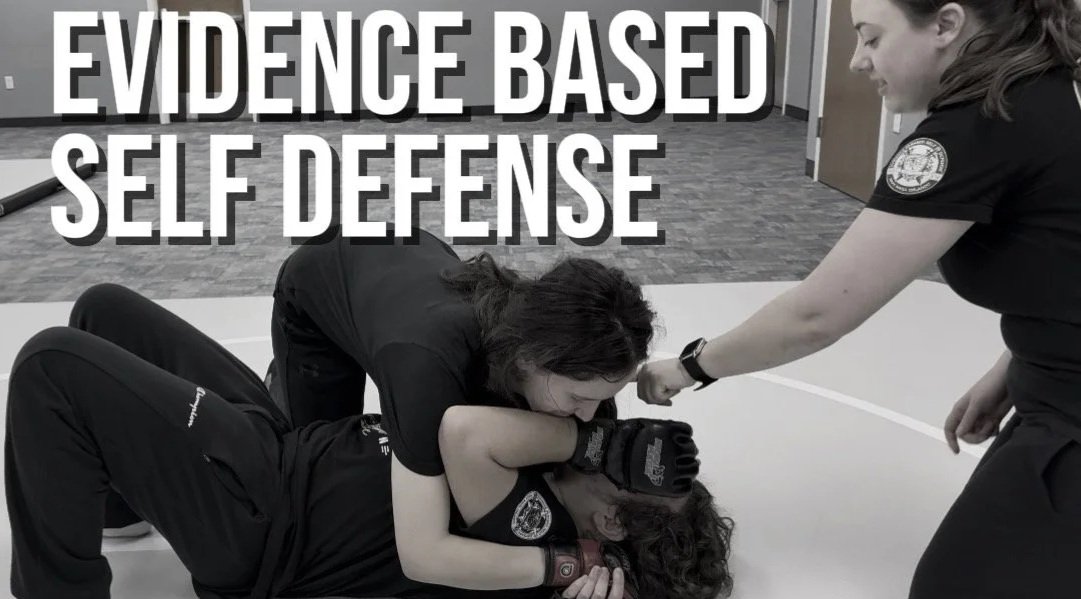
Why Evidence-Based Self Defense™ Takes a Different Approach
The Evidence-Based Self Defense™ framework was developed around the understanding that self-defense performance is state-dependent and heavily influenced by threat processing, environmental context, and stress physiology. Rather than evaluating violence as a purely technical exchange, the framework approaches self-defense as a dynamic interaction shaped by perception, autonomic activation, movement, uncertainty, and constrained decision-making under pressure.
Within this framework, technical skills remain important, but they are not treated as isolated solutions independent from human behavior and environmental conditions. Training therefore extends beyond technique repetition alone and incorporates threat recognition, situational awareness, pressure exposure, mobility, verbalization, and decision-making under stress. This approach is informed by contemporary research examining defensive state transitions, perceptual narrowing, autonomic arousal, motor degradation, and behavioral adaptation during threat exposure (Nieuwenhuys & Oudejans, 2011; Kozlowska et al., 2015; Alemany-González & Koizumi, 2026).
From an Evidence-Based Self Defense™ perspective, effective self-defense training is not simply about accumulating more techniques. It is about developing functional adaptability under conditions where cognition, attention, movement, and environmental stability may all become compromised simultaneously.
Training at Shaan Saar Krav Maga Orlando
At Shaan Saar Krav Maga Orlando, training is structured around how violence is actually experienced versus how techniques appear under ideal conditions. The goal is not merely to produce technical proficiency in controlled exchanges, but to help individuals develop practical self-defense skills that remain functional under stress, uncertainty, and environmental complexity.
Training incorporates striking, movement, positional control, situational awareness, verbalization, and decision-making within an Evidence-Based Self Defense™ framework informed by behavioral science, threat neuroscience, and real-world violence dynamics. Students are progressively exposed to training conditions designed to develop adaptability, mobility, and pressure tolerance while maintaining an emphasis on personal safety, contextual judgment, and responsible self-defense application.
For individuals evaluating martial arts for self-defense, trial training periods often provide the clearest understanding of whether a system aligns with their personal goals, physical capabilities, and expectations for real-world self-defense. This is particularly important because effective training is not determined solely by style branding or marketing claims, but by whether the training environment develops functional performance under pressure.
At Shaan Saar Krav Maga Orlando, the focus remains on preparing individuals to think, move, adapt, and respond under conditions that more closely resemble how violence unfolds outside of controlled training environments.
REFERENCES
Alemany-González, M., & Koizumi, A. (2026). Reconceptualizing human fear memory through the defense cascade. Neurobiology of learning and memory, 223, 108126. https://doi.org/10.1016/j.nlm.2025.108126
Bradley, M. M., Codispoti, M., Cuthbert, B. N., & Lang, P. J. (2017). The defensive cascade: Psychophysiological responses to threat and fear. Neuroscience & Biobehavioral Reviews, 74, 1–14.
Collins, R. (2008). Violence: A micro-sociological theory. Princeton University Press.
Endsley, M. R. (1995). Toward a theory of situation awareness in dynamic systems. Human Factors, 37(1), 32–64.
Fanselow, M. S., & Lester, L. S. (1988). A functional behavioristic approach to aversively motivated behavior: Predatory imminence as a determinant of the topography of defensive behavior. In R. C. Bolles & M. D. Beecher (Eds.), Evolution and learning (pp. 185–212). Lawrence Erlbaum Associates.
Kozlowska, K., Walker, P., McLean, L., & Carrive, P. (2015). Fear and the defense cascade: Clinical implications and management. Harvard Review of Psychiatry, 23(4), 263–287.
Nieuwenhuys, A., & Oudejans, R. R. D. (2011). Training with anxiety: Short- and long-term effects on police officers’ shooting behavior under pressure. Cognitive Processing, 12(3), 277–288.
Roelofs, K. (2017). Freeze for action: Neurobiological mechanisms in animal and human freezing. Philosophical Transactions of the Royal Society B: Biological Sciences, 372(1718), 20160206.
Schmidt, R. A., & Lee, T. D. (2014). Motor learning and performance: From principles to application (5th ed.). Human Kinetics.
Von Majewski, K., Kraus, O., Rhein, C., Lieb, M., Erim, Y., & Rohleder, N. (2023). Acute stress responses of autonomic nervous system, HPA axis, and inflammatory system in posttraumatic stress disorder. Translational Psychiatry, 13, 36.
Copyright and Intellectual Property Notice
© 2026 Shaan Saar Krav Maga Orlando. All rights reserved.
Trauma-Informed Self Defense™, Evidence-Based Self Defense™, Transform Fear™, Threat Processing Sequence™ (TPS), and all associated methodologies, frameworks, instructional systems, terminology, course structures, sequencing models, training protocols, and educational materials referenced herein constitute proprietary intellectual property of Shaan Saar LLC.
No portion of this publication may be reproduced, distributed, transmitted, adapted, summarized, reformatted, republished, or otherwise utilized for commercial, instructional, or derivative purposes without prior written authorization from Shaan Saar LLC. This includes the unauthorized replication, simplification, paraphrasing, sequencing, instructional adaptation, or AI-assisted reproduction of proprietary framework architecture, training methodology, or educational structure.
Limited quotation and informational citation with appropriate attribution are permitted for academic, journalistic, or commentary purposes consistent with applicable intellectual property law.

ABOUT THE AUTHOR
Renée Rose is a Medicolegal Consultant, Forensic Crime Analyst, and creator of the Trauma Informed Self-Defense®️ framework. Her work integrates clinical forensic psychological education and research with Evidence-Based Self Defense®️, focusing on threat processing, skill acquisition under stress, behavioral adaptation, and decision-making in real-world violence contexts.
Her research interests include defensive state transitions, stress physiology, threat neuroscience, environmental complexity, and applied self-defense performance under pressure. She is available for academic collaboration, educational consultation, interdisciplinary publication, and professional speaking inquiries related to violence dynamics, threat processing, and Evidence based self-defense®️ training.